Building a Voice Assistant From Scratch — What Nobody Tells You About the Decisions That Actually Matter

When I set out to build my own voice assistant, I had a seemingly simple mental model: capture audio, transcribe it, send it to an LLM, speak the response. Four boxes on a whiteboard, a few arrows between them. How hard could it be? Turns out, the arrows are where all the interesting engineering happens. And the boxes? Each one hides a small universe of trade-offs that only reveal themselves once you start building for real hardware, real latency requirements, and real-world constraints. ...
December 10, 2025 · 13 min · 2584 words · Enrico Mischorr

How to structure teams

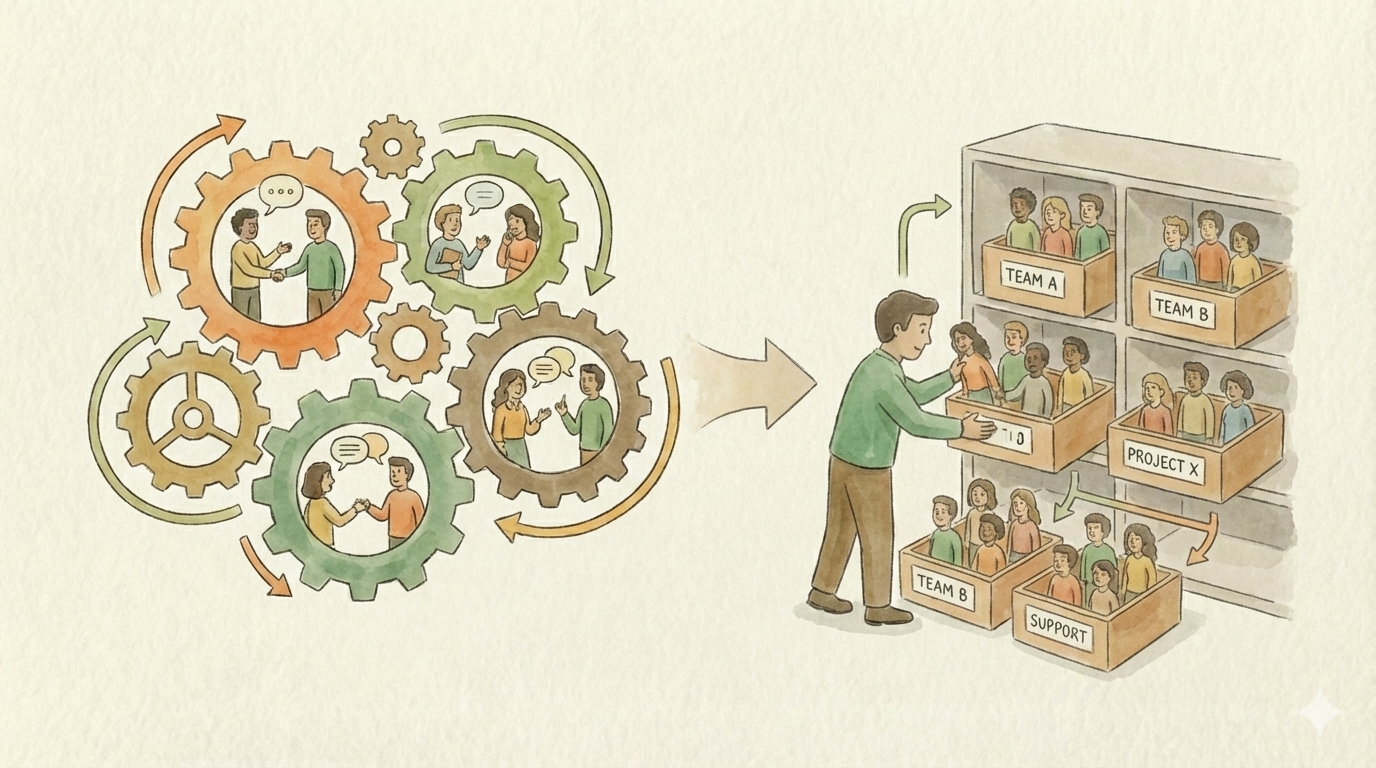
You’ve probably seen it: a reorganization rolls out, someone draws new boxes on a chart, and within months the same coordination problems resurface — just wearing different names. The issue isn’t that the structure was wrong. It’s that nobody asked the right questions before drawing those boxes. I recently read Team Topologies by Matthew Skelton and Manuel Pais, and it crystallized something I’ve felt across the last years of leading teams and building software: team structure isn’t a template you copy. It’s a design decision — and like all design decisions, it comes with trade-offs. ...

April 12, 2024 · 4 min · 817 words · Enrico Mischorr
A snapshot of code

The problem with Snapshot Testing

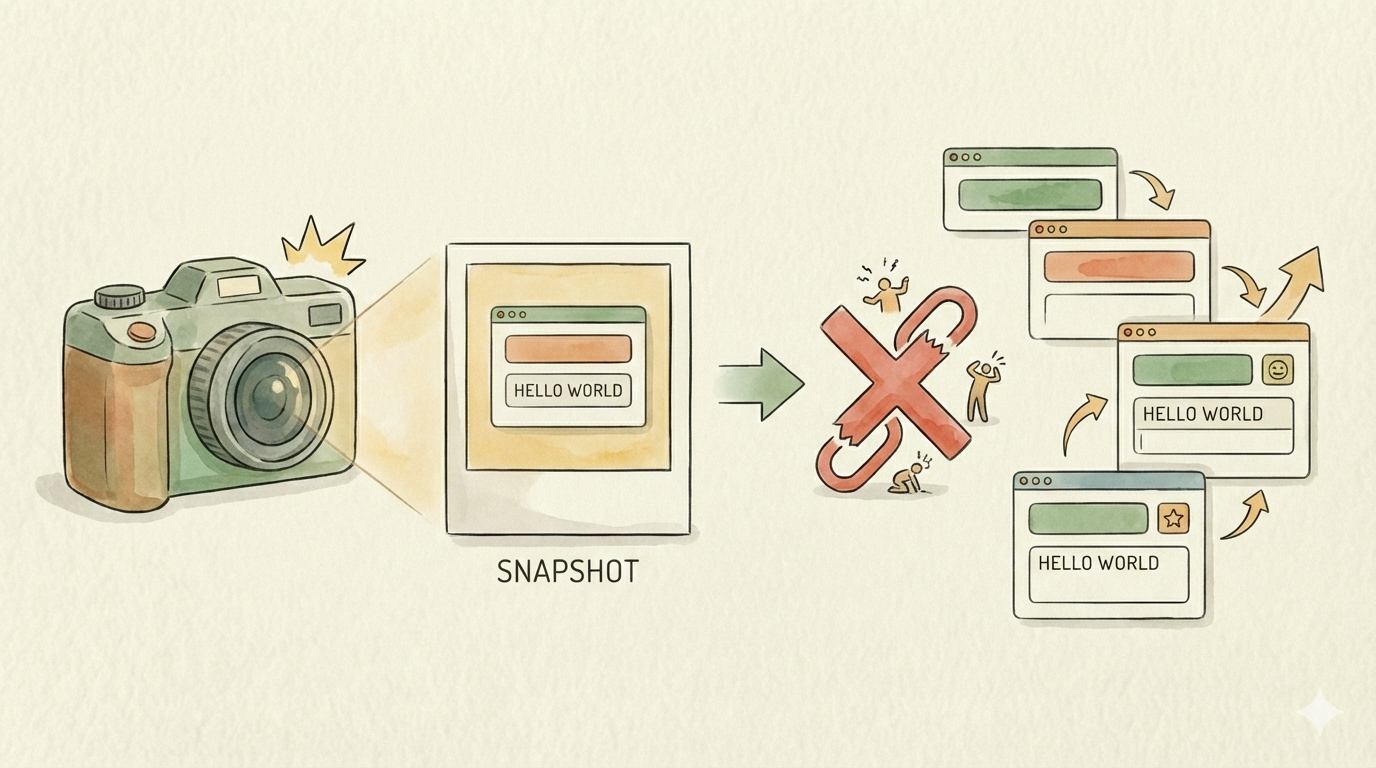
I’ve seen it in code reviews. And you probably too. A PR changes a button’s color, and suddenly 47 snapshot tests fail. The author updates them all with --updateSnapshot, the reviewer skims past 200 lines of .snap file changes, and everyone moves on. No one actually verified anything. This is snapshot testing’s dirty secret: it feels like testing without actually being it. What Snapshot Tests Actually Assert I know, most developers probably like snapshot testing. It’s easy. And it takes away all the effort to write tests. But if that’s what you’re looking for you could just as well skip tests as a whole and “safe” yourself the work. ...

February 11, 2023 · 5 min · 873 words · Enrico Mischorr
People talking to each other

How to Find Good People to Hire (Without Competing on LinkedIn)

LinkedIn is a crowded battlefield. If you’re not a well-known name or don’t have recruiter budgets to burn, your job posting is competing against thousands of others — and losing. The good news? Some of the best candidates aren’t actively job hunting on platforms at all. They’re learning, building, and showing up in places most companies overlook. Here’s where to find them. Universities: Get There Before Everyone Else The most obvious advantage of university recruiting is access to talent before the market gets to them. But the less obvious advantage is even better: students are often more adaptable, curious, and willing to grow into a role than someone who’s been doing the same job for five years. As an added bonus, they often bring in new ideas and tech-stacks your older colleagues are not aware of. ...

August 21, 2021 · 5 min · 992 words · Enrico Mischorr
A person heading towards a new challange

Becoming a Team Lead can be harder than being one

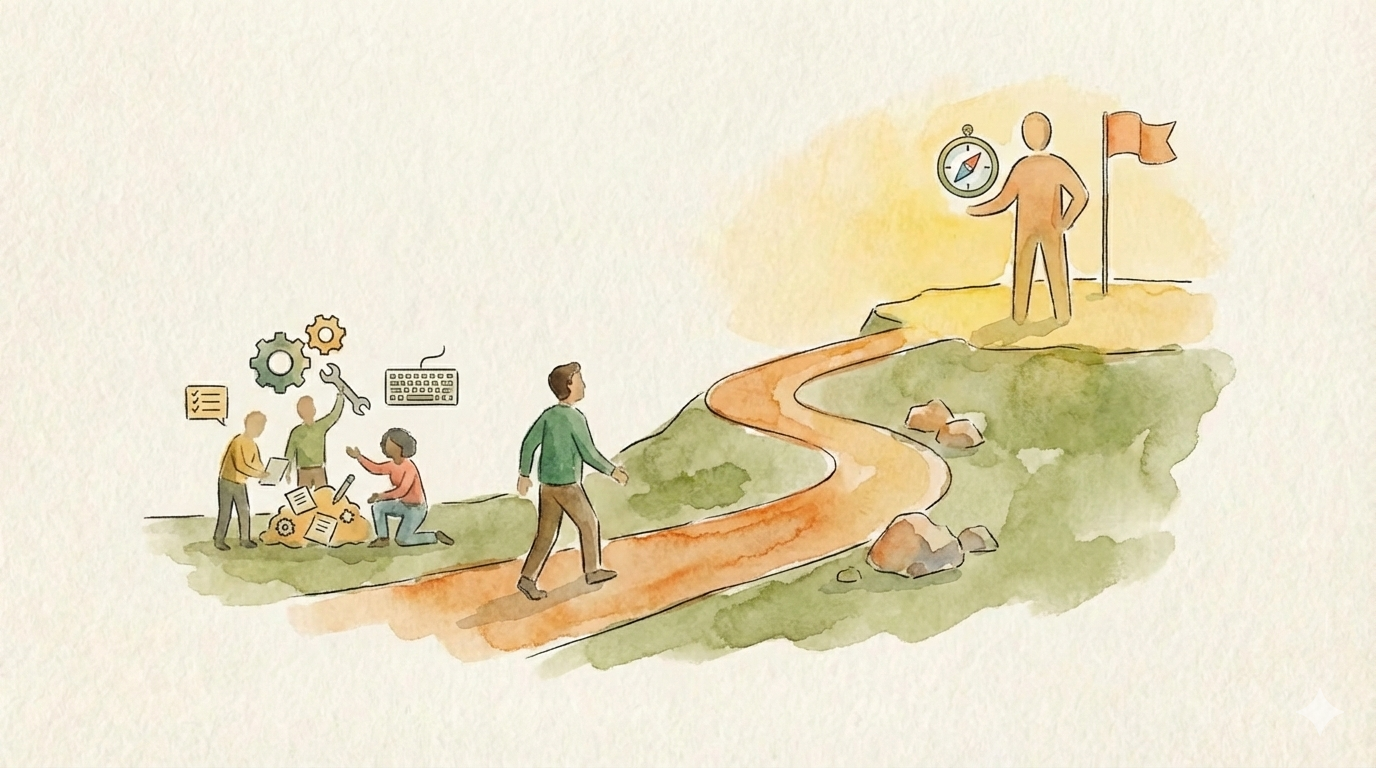
Nobody would have thought that the hardest part of becoming a team lead wasn’t the leading — it was the becoming. When I made the switch from senior engineer to team lead, I somehow expected a clean break. Old role ends on Friday, new role starts on Monday. In hindsight that was naive. In reality, the transition stretched over months. And during that time, I was stuck in a no man’s land that was more exhausting than the team lead role itself. ...

October 25, 2020 · 4 min · 831 words · Enrico Mischorr
inter-connected cog wheels

How You Know You're Doing Scrum Wrong

Here’s the truth about Scrum: if you’re following it to the letter, you’re probably doing it wrong. I’ve seen teams treat the Scrum Guide like holy scripture — rigidly executing every ceremony, obsessing over story point accuracy, and monitor process compliance. Meanwhile, they ship late, burn out, and wonder why this “agile” thing doesn’t feel very agile. The problem isn’t Scrum itself. It’s confusing the practices with the principles. The “One Size Fits All” Trap Scrum was designed as a framework, not a rulebook. Yet many teams adopt it as a fixed template: two-week sprints, daily standups at 9:15, retros on Friday, refinement on Monday. Copy-paste from a random team that posted about it on the internet. ...

March 5, 2020 · 4 min · 739 words · Enrico Mischorr